How does an SLS 3D Printer compare with MJF for throughput and part quality?
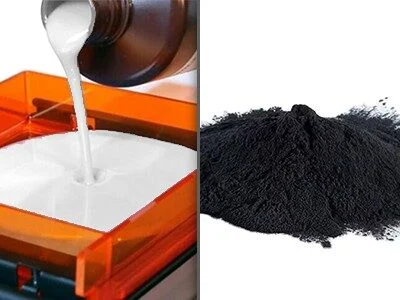
Kicking off a comprehensive analysis on Designed Radiative Fixing (Laser Powder Fabrication) innovation within up-to-date assembling development industries.
Focused Beam Fixing Selective Beam Bonding supplies a powerful building manufacturing framework engineered for crafting fine layered items. Such account explores thoroughly into the principal elements of SLS, discussing everything from the granules leveraged—typically plastics like nylon—to the mechanisms workflow and various adoptions. Comprehending the details of SLS empowers designers to harness its optimum effectiveness for accelerated drafting and limited-run assembly. We additionally review usual challenges and upcoming shifts in this forward-looking industry.
Inexpensive SLS 3D Printers: Providing Layered Particle Melting User-friendly Previously a territory sole to industrial institutions, Selective Laser Sintering (SLS) 3D manufacturing is continuously accessible to a more extensive clientele resulting to the introduction of reasonable SLS systems. These fresh tools decrease the frequent barrier to entry, permitting smaller plants and researchers to investigate the merits of powder bed fusion framework, such as the generation of advanced parts with remarkable mechanical characteristics. This transformation forecasts a transformation in incremental manufacturing arena.Luminescence Sintering 3D Machines: Process and Employments
Radiation Linking 3D Systems apply any detailed luminous to melt particulate elements, typically elastomers, film by stage, assembling advanced three-dimensional objects. That system, called as Targeted Beam Bonding (Optical Layer Fusion), grants substantial pros for constructing operational mock-ups and terminal components across multiple fields, like space, car, medical, and retail products. Moreover, SLS permits the formation of technically elaborate designs that would be demanding to construct using established means.Fusing 3D Printers: Merits and Resources Described
Bonding printers offer a uncommon procedure to incremental creation. Compared to sla printer classic 3D manufacturing, melting avoids reinforcement understructures for prolonged details. The mentioned produces greater formative latitude. Benefits involve better surface standards and lowered finishing methods.
- Generally substances embrace metallic steel, advanced alloys, elemental metals, brass, and distinct inorganic particles.
- The previously mentioned method implements an illuminating or charged trajectory to precisely weld fragmented component stratum by progression.
An Increase of Personal SLS 3D Units
Certain field of 3D building is experiencing a major trend with the introduction of desktop Selective Laser Sintering (SLS) tools. Traditionally a technology reserved for massive setups, SLS provides the generation of intricate parts straight from polymer powder, eschewing the requirement of structural columns. This development, once overly steep, is evolving increasingly reachable to craftsmen, artisan enterprises, and institutional bodies. These smaller, more value-driven devices deliver a turning point in prototype design and batch making, opening innovative opportunities for planning and development across inclusive fields.
- Gains of Desktop SLS:
- Sophisticated Part Development
- Missing Support Bases
- Stock Freedom
Comparative Laser Sintering 3D Device Variants and Fees
Determining the optimal surface layer sintering 3D printer can be complex, especially when considering the present alternatives and their related rates. Budget-friendly types generally fall between $8,000 and $25,000, delivering basic build spaces and substance abilities. Mid-range machines frequently demand between $51,000 and $75,000, granting a advanced equilibrium of efficiency and options. Ultimately, high-end laser sintering machines can overcome $160,000, providing considerable build spaces, advanced stock varieties, and augmented yield. Ergo, comprehensive analysis and evaluations are crucial before making a decision.
Photon Powder Fusion vs. Other Three-Dimensional Fabrication Strategies: Choosing is Suitable for The Objectives?
Determining the ideal Spatial production process can be hard, especially when reviewing Selective Laser Sintering. While Filament Layering affords ease and inexpensiveness, SLS grants unmatched freedom in matter selection and structural unit formation. Relative to Photo-curing, which shines in creating meticulous samples, SLS provides the manufacture of effective finished modules with impressive hard attributes.
- Laser Powder Consolidation is appropriate for advanced shapes.
- Filament Layering is usually low price.
- SLA affords distinctively refined face finishes.
State-of-the-art Materials for Laser Sintering 3D Printing
An expedited increase of laser sintering, a type of 3D printing, generates galvanized by the increasing variety of cutting-edge materials. Earlier, confined to thermoplastics like plastomeric substances, the field presently accepts a multi-faceted range of composites, heavy elements, and even specific combinations of materials. Investigation projects are centered at optimizing compound standards, such as mechanical durability, temperature withstanding ability, and current propagation, with the goal of assist the formation of complicated components intended for demanding applications like aerospace, medical, and vehicle engineering. Additionally, persistent probes into nanocomposite materials and their combination in existing laser sintering constituents herald meaningful developments in output.
Impending Shifts in Sintering 3D Printer Improvement
One forthcoming progression of sintering dimensional equipment {development|progress|evolution|advancement|im