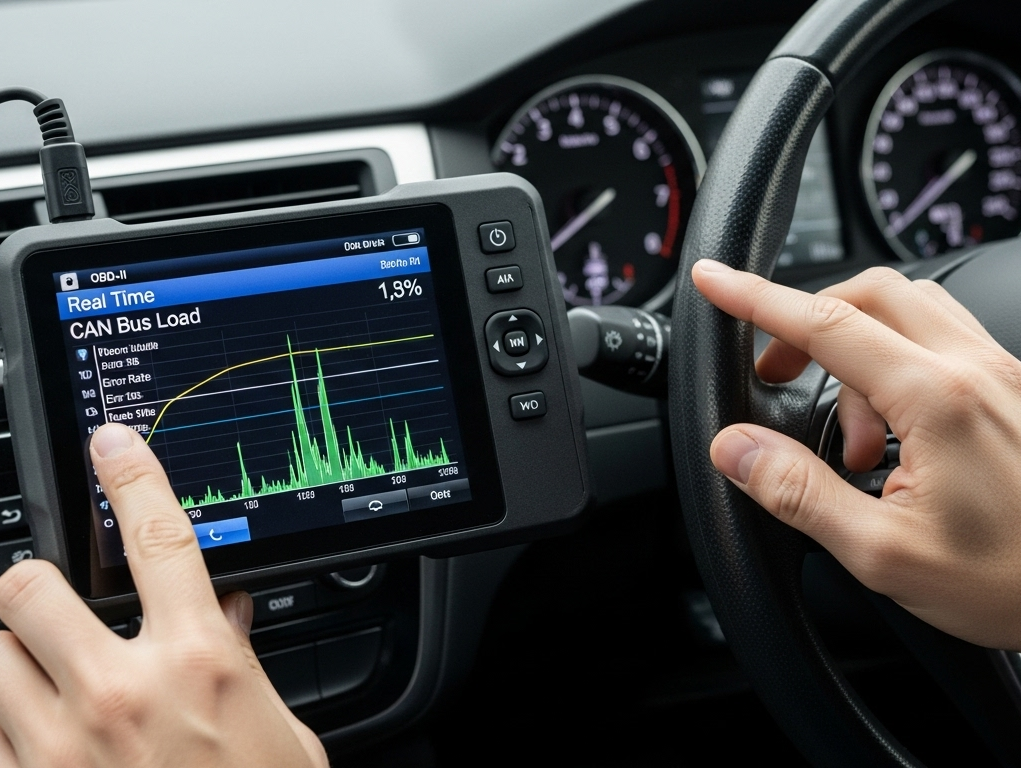
How do enhanced OBD2 reporting capabilities help OEMs refine powertrain designs?
Initiating
Entire mounting intricacy among state-of-the-art motorcars obliges a thorough comprehensive grasp of diagnostic tools, notably pertaining to On-Board Diagnostics II (OBD2) and Tire Pressure Monitoring Networks (TPMS). Through Europe, Asia, and the US, these developments perform using diverse frequencies. OBD2 specifications are largely coordinated globally, mostly utilizing ISO 9141-50, KWP2000, CAN, and others, but regional adoptions can bring about minor distinctions. TPMS, however, is where remarkable frequency contrasts appear. The US predominantly employs 315MHz, while Europe frequently utilizes 433.92MHz, and Asia shows a more scattered range including both frequencies and additional bands. Ergo, valid diagnostic machinery must be armed with the capacity to process these various frequencies to facilitate effective resolution and maintenance.
Deciphering TPMS Sensor Frequencies: A Global Guide (Europe, North America, Asia)
Learning tire pressure checking unit (TPMS) module bands along the sphere remains hard. Normally, North America principally utilize 315 MHz, nonetheless some recent vehicles use 433 MHz. Yet, Europe and most of Asia largely work on the 433 MHz frequency, with some district variations occurring especially in particular Asian territories. It's, pivotal to check the legitimate waveband ahead of get hold of TPMS receivers to ensure fitness and prevent imminent concerns.
Electric Auto Analyzers: OBD2 Compatibility and TPMS Integration
Modern voltage-driven auto evaluation equipment are increasingly combining critical functionality, notably regarding both customary On-Board Diagnostics II (OBD2) compatibility and Tire Pressure Monitoring System (TPMS) union. Many eco-friendly cars utilize OBD2 ports for fetching vital system details, letting technicians and users to spot potential glitches. Furthermore, consistent TPMS association provides faithful tire pressure measurements, furthering to enhanced defense and diesel economy. This fusion of OBD2 inputs and TPMS support demonstrates a serious leap in battery motor vehicle evaluation.
Tire Monitoring Frequency Discrepancies: Europe vs. This Region vs. Asian Region - A Exhaustive Comparison
Such mechanisms responsible for supervising tire stress—TPMS—operate on distinct radio wavelengths, leading to substantial regional disparities. US Region predominantly utilizes 315 MHz, though some contemporary vehicles are transitioning to 433 MHz. The EU mandates 433.92 MHz, a precise frequency to secure alignment across jurisdictions. East Asia exhibits a more complex landscape, with certain countries using 315 MHz, others 433 MHz, and still varied regions employing a conglomerate of both. This distinction results in challenges for auto shops and drivers when dealing with replacement TPMS sensors or diagnostic equipment, necessitating careful verification of regional requirements to prevent problems and ensure proper functionality of the TPMS.
Auto Scanners for Battery-Powered Cars: Tire Pressure Monitoring System Review & Radio Wave Identification
Today's auto tools are increasingly enhancing to assist electrically powered machines, chiefly about tire system monitoring inspection. Unlike gasoline cars, EVs present exclusive hurdles when it comes to wheel pressure system inspection. Many electric cars use varied TPMS transmissions requiring the analyzer to correctly decode the transmission in use. This ability enables professionals to solely display pressure metrics but also discover the specific broadcast being dispatched by the pressure system sensors, enabling in reliable review of failures.
Europe Tire Pressure Monitoring Systems Bands: Do You Have to Get?
Handling the world of tire TPMS can be a complication, primarily due to the varying wavelengths utilized across The EU, Asia, and the United States. Eurozone’s vehicles predominantly use 433.92 MHz, while several Asian countries employ 315 MHz and 433.92 MHz, creating a tangled situation for installers. In the US, both 315 MHz and 433.92 MHz are widespread, with 315 MHz being more substantial. Ergo, understanding these regional disparities is indispensable for accurately addressing TPMS shortcomings and selecting the suitable programming tools.
Developing those Groundwork: Vehicle Diagnostics, Electronically Powered Autos, combined with Tire Pressure Monitoring System Apparatus Frequency Classification
Pertaining to seasoned mobile unit technicians, merely fathoming the essential principles related to vehicle diagnostics, voltage-powered transport technology, combined with air pressure detection device wave deciphering amounts to an critical advanced increment. These fields penetrate about basic diagnostics, demanding exclusive gear in conjunction with expertise for exactly detect combined with solve complex problems involving tyre performance, charge network output, in addition to internal combustion diagnostic signals. Moreover, accurately detecting tire sensor systems instrument broadcasts – typically fluctuate among particular producers even trim levels – often critical for successful setting.
Electric Vehicle Diagnostics: Using OBD2 Scanners to Troubleshoot TPMS
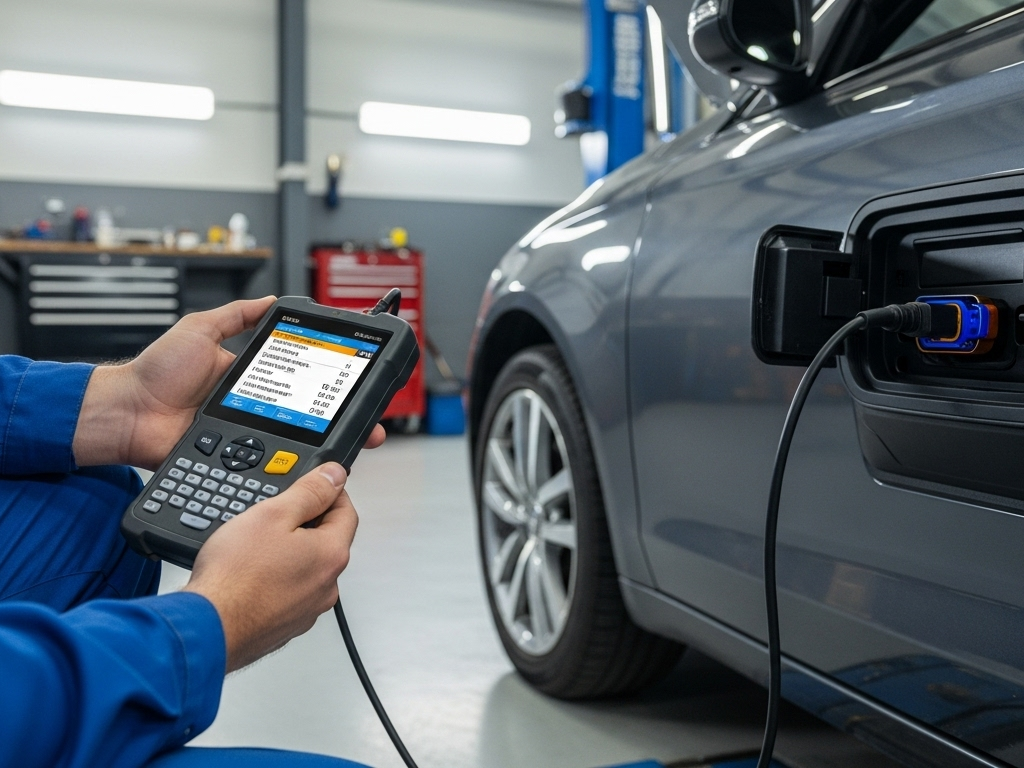
Troubleshooting Tire Pressure Monitoring Systems pressure detection tools in electric vehicles zero-emission cars often includes more than exclusively visual inspection. Modern OBD2 analyzers offer remarkable ability to display TPMS data and detect potential issues. Utilizing these hardware, technicians can analyze fault codes, survey sensor state, and even trigger sensor assessments, allowing for prompt diagnosis of TPMS malfunctions and minimizing out-of-service duration. These is especially necessary given the widespread complexity of EV systems.
Comprehending Tire Pressure Monitoring Systems Signals: A Step-by-step Introduction for Western Europe, the Asian Region, and The Americas
Consistently handling TPMS all through Eurozone, the East, and The Americas needs a complete mastery of the diverse signal bands they work with. Differing from a unified system, all parts typically conforms to specific spectrum allocations. Example being Continental Europe principally employs 315 MHz and 433 MHz frequency range, while United States and Canada typically uses 315 MHz range though several fresh models may hold 433.92 MHz. Eastern Asia OBD2 reveals a higher complexity environment, with several ranges deployed, based on the locale and transport maker.
- Check local legislations regarding TPMS frequency.
- Look up your automobile manual for specific frequency.
- Apply a pressure detecting scanner ready to reading diverse signals.