Can entry‑priced 1060 steel katana models fund innovation in higher tiers?

An time-honored Japanese sword represents a gorgeous piece of craftsmanship, but say you aim to to demonstrate your individual character? Customizing your cutting tool is a deep journey, allowing you to construct a truly matchless piece. From the hilt wrapping and binding to the guard design and tempering curve, each element offers a chance for tailored look. This investigation delves into the sphere of katana refinements, providing details for both initiates and experienced enthusiasts wanting to establish their stamp on the traditional art of the samurai.
Freshman's True Artistry
For learners determined to embark on the rewarding journey of eastern weapon training , 1060 steel katanas present an ideal entry point. This defined grade of essential steel reaches a perfect balance between expense and effectiveness . While not reaching hard as higher-end steels, 1060 enables a workable level of blade refinement , making it fitting for trainees to enhance the groundwork of katana upkeep and admire the charm of original Japanese weaponry. It’s a superb choice for fostering experience without the fiscal burden of more elite steels.
T Gear Steel Weapons : Optimizing Excellence and Value
Catering to devotees seeking an authentic cutlass experience without overpowering the cash reserve , T10 substance katanas represent a appealing option. These daggers offer a marked improvement in resilience compared to cheaper alternatives, exhibiting good edge retention and sufficient flexibility for rudimentary slashing techniques. While not rivaling the eminent characteristics of advanced steels like T100 or folded material , T10 provides a worthwhile blend of performance and value , making them a appreciated choice for rookies and those on a fixed financial .
Beyond the Metal: Adjusting Your Blade's Hardware and Hold
Considering the buffed steel is undeniably the essential point of a katana, truly boosting its charm lies in the careful customization of its components and tsuka . This approach allows users to showcase their special flair . Consider the comprehensive possibilities: menuki - decorative charms that introduce visual detail ; the hamon sheaths – often masterfully etched ; the tsuka nucleus itself, wrapped in classic ito rope ; and the fusa butt cap , which can be fabricated from various substances like treasures or antler .
- Adopt styles that match with you.
- Investigate with various components .
- Accent durability for a stable impact .
The Allure of the Katana: History, Craftsmanship, and Steel
That traditional armament bears a unparalleled allure, steeped in centuries of eastern history and folklore . More than merely a weapon of conflict , it's a mark of the fighter class ethos – a fusion of artistry and regulation . Its expansion spanned several generations, with early steel evolving into the polished curvature and precise edge we acknowledge today. The creation involved is truly amazing , requiring spans of preparation to perfect . The process involves a involved folding of smelted iron , creating layers that augment the blade's flexibility and slicing ability. Diverse schools of crafting appeared , each with their separate secrets and techniques for achieving the ultimate equilibrium and edge - a truly strenuous pursuit.
- First Katana varieties
- The responsibility of the historical weapon in soldier culture
- Established processing practices
Selecting the Ideal Steel for Your Katana Project: 1060 vs. T10
Selecting the right steel is critically important for any sword project, and the decision between 1060 and T10 can be tricky. 1060 is a popular American element, offering a competent balance of rigidity and endurance, supplying it reasonably easy to handle. However, T10, a East Asian steel, commonly boasts enhanced wear endurance and can potentially achieve a amplified terminal hardness, although it can be substantially complex to operate and requires careful heat processing. Consider your experience level and aimed attributes: for a novice, 1060 may be a simpler foundation, while the master smith might choose the augmented attributes of T10.
- Simplicity of Utilizing
- Resistance
- Conclusive Strength
Realizing the Capability: Sophisticated Katana Tuning Practices
Becoming proficient in blade modification extends far beyond basic grinding. Serious practitioners are now exploring advanced techniques to truly discover a blade's hidden potential. This comprises intricate work with the temper pattern, utilizing specialized compositions for differential strengthening and carefully choosing the outline of the protector to optimize balance and performance. Beyond purely functional refinements, artisans are increasingly focused on creating unparalleled aesthetic elegance, through complex carving and layered glazes that truly transform a katana into a showpiece.
From Elemental Metal to Artistry: Forging a 1060 Blade
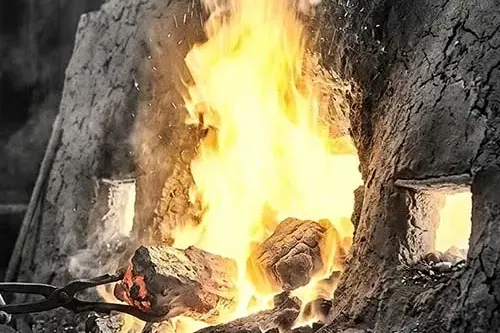
The journey embarks with typical 1060 substance, a durable material far absent the beautiful katana it will mature into . Master bladesmiths carry out a intricate process of integrating and constructing the unrefined steel, repeatedly tempering it and pounding it to rid impurities and create a steady grain structure. This arduous process, often enduring for stretches , builds the important toughness and malleability characteristic of a standard Japanese weapon . Extra heat refinements, including controlled hardening and t10 steel katana conditioning , are indispensable to achieve the intended steadiness of sharpness, persistence and magnificence.- Layering: Minimizes impurities and constructs grain structure.
- Constructing: Forms the steel into the initial blade form.
- Quenching: Controls the final hardness and flexibility.
The Persistent Magnetism of the Katana: Thorough Examination of Alloy and Modification
This time-honored katana lasts a compelling symbol of Japanese heritage , its fascination far exceeding mere armaments . Forged from rare steel and habitually featuring intricate trims, the system of creation itself is a sacred art. Beyond the fundamental craftsmanship, the ability to customize a katana - from the temper line to the handle wrapping and guard - grants for a deeply individual representation for both fans and carriers alike. This integration of long-established steelwork and boundless personalization produces the katana's continued fame across the earth .